Senses, Expectations and Perception
USchool 2026
Jami Pekkanen · University of Helsinki
Which square is lighter?
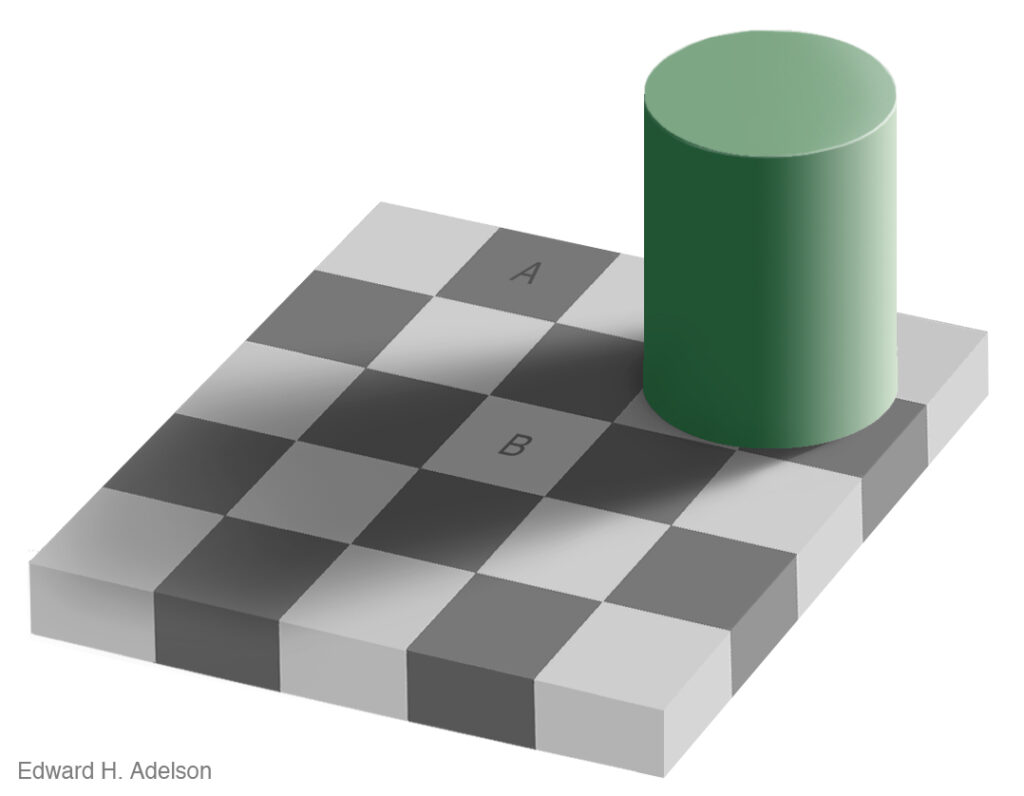
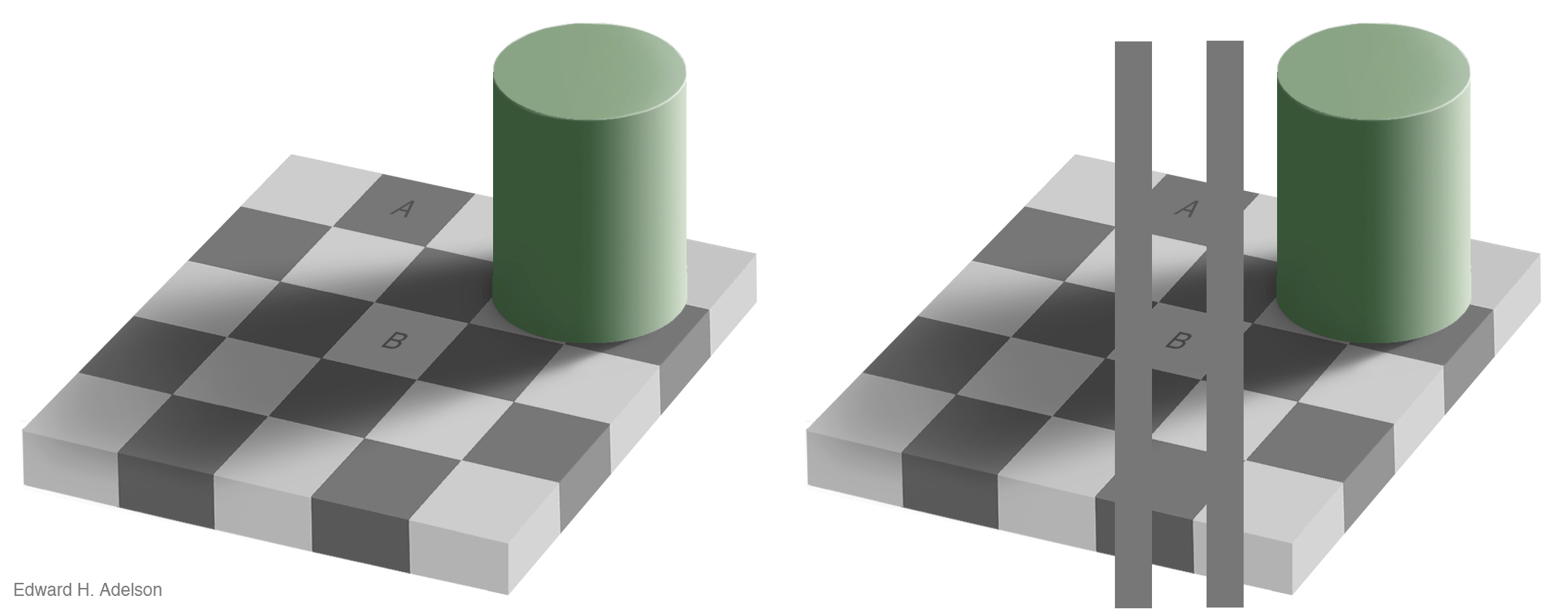
The image values are equal.
What colours do you see?
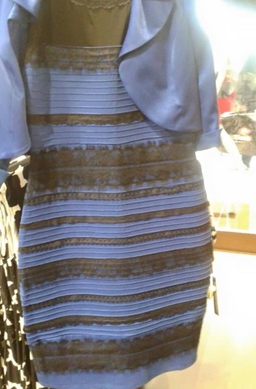
Lafer-Sousa et al. (2015)
N = 1,401
Respondents (%)
0%
10%
20%
30%
40%
50%
60%
30%
White /
gold
gold
57%
Blue /
black
black
11%
Blue /
brown
brown
2%
Other
Reported colour combination
Wallisch (2017), Run 1
N = 8,084
Respondents (%)
0%
10%
20%
30%
40%
50%
60%
59.1%
White /
gold
gold
27.2%
Blue /
black
black
8.9%
Blue /
gold
gold
0.8%
White /
black
black
1.1%
Switching /
ambiguous
ambiguous
3.0%
Other
Reported colour combination
Wallisch (2017), Run 2
N = 5,333
Respondents (%)
0%
10%
20%
30%
40%
50%
60%
55.6%
White /
gold
gold
30.9%
Blue /
black
black
6.7%
Blue /
gold
gold
0.8%
White /
black
black
1.2%
Switching /
ambiguous
ambiguous
4.7%
Other
Reported colour combination
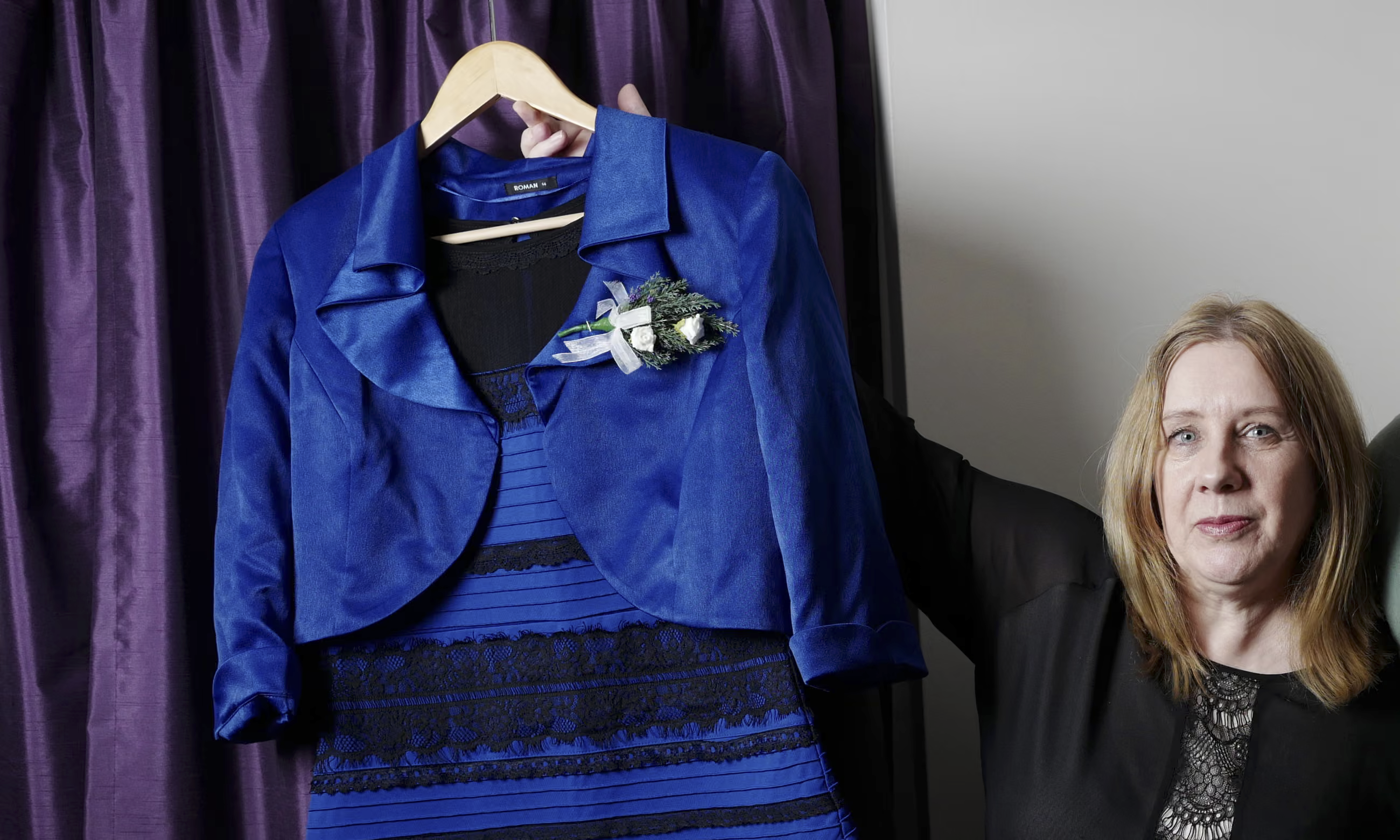
Assumed shadow went with more white/gold reports.
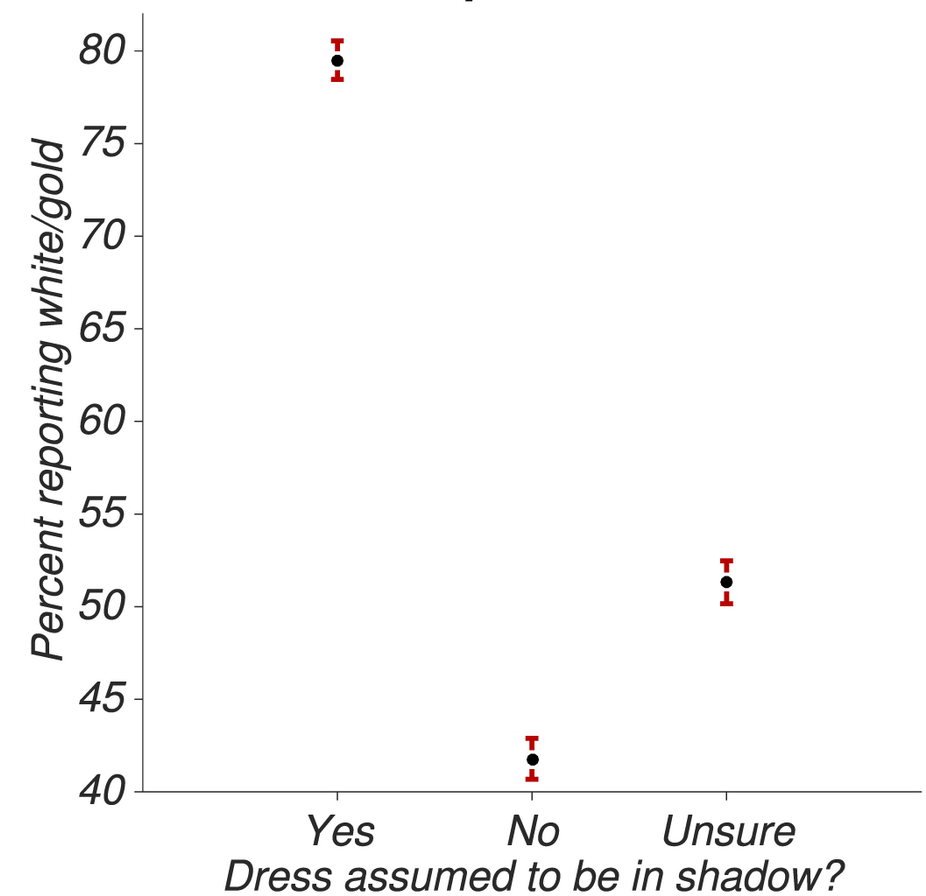
Same image. Different inferred lighting.
ImageAvailable sensory evidence
→InterpretationSurface and illumination
→Perceived colourWhat the observer experiences
Multisensory perception
What you see can change what you hear.
Multisensory effects
| Example | Interaction |
|---|---|
| McGurk effect | Lip movements can change which syllable is heard. |
| Lip-reading in noise | Visible speech can help us understand speech in noisy surroundings. |
| Wine colour | White wine coloured red was described using red-wine odour terms. |
The familiar five are a starting point.
| Example | Information |
|---|---|
| Vision | Light |
| Hearing | Sound-induced mechanical vibration |
| Taste and smell | Chemical stimuli |
| Skin senses | Touch, temperature, pain |
| Balance | Head motion and orientation |
| Proprioception | Body position and movement |